Deck painting Berwick
Deck Painting Berwick
Deck painting, staining and restoration for Berwick homes — with the preparation and coating system matched to the timber, existing finish and way the deck is used.
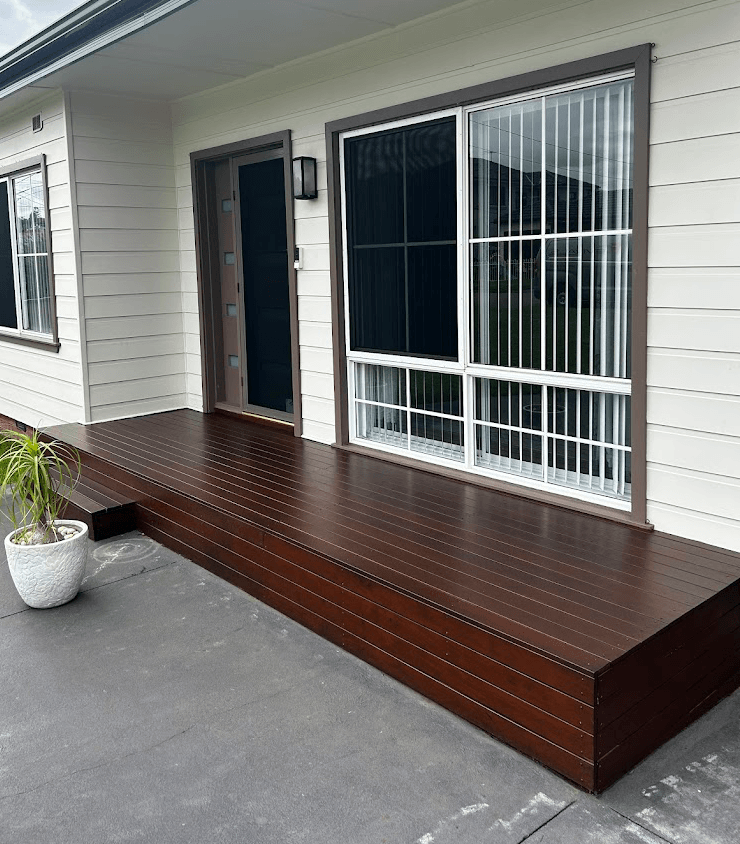
Tell us about your deck and we’ll arrange a free on-site inspection with a clear written scope.
Deck painting and restoration for Berwick homes
Berwick’s housing covers a wide range. Established homes around Berwick Village sit alongside 1980s and 1990s housing, the 2000s residential estates, Berwick Springs — which opened in 1997 and is now an established estate — and newer residential areas heading toward Officer. Toward Harkaway and Beaconsfield, larger blocks bring bigger outdoor entertaining areas into the mix.
Because of that, deck size, construction and exposure vary considerably from one property to the next. A small front entry deck, a multi-level hardwood deck with stairs and a pergola-covered alfresco area all need different preparation. The first question is not which colour, but whether a deck should be painted, stained, oiled, restored or left uncoated — and that depends on the timber species, its age, weather exposure, the existing coating, surface condition, foot traffic, the look you want and how much maintenance suits you. We assess the deck first and recommend a suitable system rather than selling one finish to every job.
Deck types we paint, stain & restore in Berwick
Paint, stain or oil — which finish suits your deck?
Pigmented finishes generally provide stronger UV screening than clear finishes, but actual durability depends on the product, exposure, substrate and maintenance. No finish lasts a fixed number of years on every deck.
| Finish | Appearance | UV / weather protection | Maintenance | Best suited to |
|---|---|---|---|---|
| Solid-colour exterior deck paint | Strongest colour transformation; hides much of the timber’s natural variation | Pigmented film gives strong UV screening when correctly applied | Traffic areas will eventually wear; not maintenance free | A consistent architectural colour, or older timber where grain is no longer a feature |
| Semi-transparent stain | Adds colour while retaining more timber character and grain | Pigment provides UV protection; preparation remains important | Periodic recoating as colour fades | Owners who want colour with visible grain |
| Penetrating decking oil | Enhances the natural timber look; grain stays visible | Lower UV screening than pigmented coatings | Easier to refresh but usually needs more frequent maintenance | Hardwood decks where the natural timber is the feature |
Solid-colour deck painting in Berwick
Exterior deck paints are not simply wall paints placed onto a deck. A deck is horizontal, so it carries foot traffic, furniture, dirt, strong UV, rain and moisture, while the timber itself expands and moves. The coating has to be designed to be walked on and applied over a properly prepared surface.
Where a solid-colour timber paint is selected, the exact preparation and number of coats will follow the manufacturer’s system. Some solid-colour systems specify three coats on unpainted timber; the final coat schedule follows the selected manufacturer’s instructions and the surface condition.
New timber needs different preparation
New timber can contain tannins and natural oils that interfere with coating adhesion and appearance. Coating manufacturers such as Cabot’s and Haymes recommend preparation to draw out or remove these from new, unweathered timber, rather than coating it straight away.
So we don’t automatically paint brand-new timber. We assess it, use the manufacturer’s specified preparation — or allow it to weather where that is permitted — and let it dry according to the product instructions. Waiting times differ between product systems, so there is no single rule for every new deck.
Weathered decks need more than a wash
Grey timber has oxidised surface fibres, and weathering can hide surface defects. Cleaning alone may not give a suitable surface for coating: greyed or degraded timber may need sanding, an existing coating may need removal, and damaged boards should be identified before any coating goes on. Sanding improves the surface, but it does not make structurally damaged timber sound.
Test before committing to a new coating
Previously painted or coated decks can have compatibility problems. Where the existing coating is uncertain, we inspect the surface, check whether the old coating is sound, test adhesion or compatibility on a small area where appropriate, and remove failing material rather than coating over it.
Our deck painting process
- 01
Inspection & quote
We check the timber or composite material, existing finish, moisture and condition, greyed areas, stairs, rails, balustrades, access, landscaping, furniture and damaged boards — and decide whether it is maintenance, a recoat or a restoration.
- 02
Cleaning
Dirt, mould, algae where present, grime and surface contaminants are cleaned using a method suited to the substrate. Pressure washing is only used where appropriate.
- 03
Sanding & surface preparation
Depending on condition we sand greyed timber, remove failing coatings, smooth rough areas and feather transitions to prepare for the selected finish.
- 04
Repairs
Loose or split boards, damaged timber, exposed fasteners and other obvious issues are identified and discussed before coating.
- 05
Coating system
The selected oil, stain or paint system is applied according to the manufacturer’s requirements and the surface condition.
- 06
Quality check & walkthrough
Edges, coverage, stairs, rails, corners and difficult-access areas are checked for finish consistency before a final walkthrough with you.
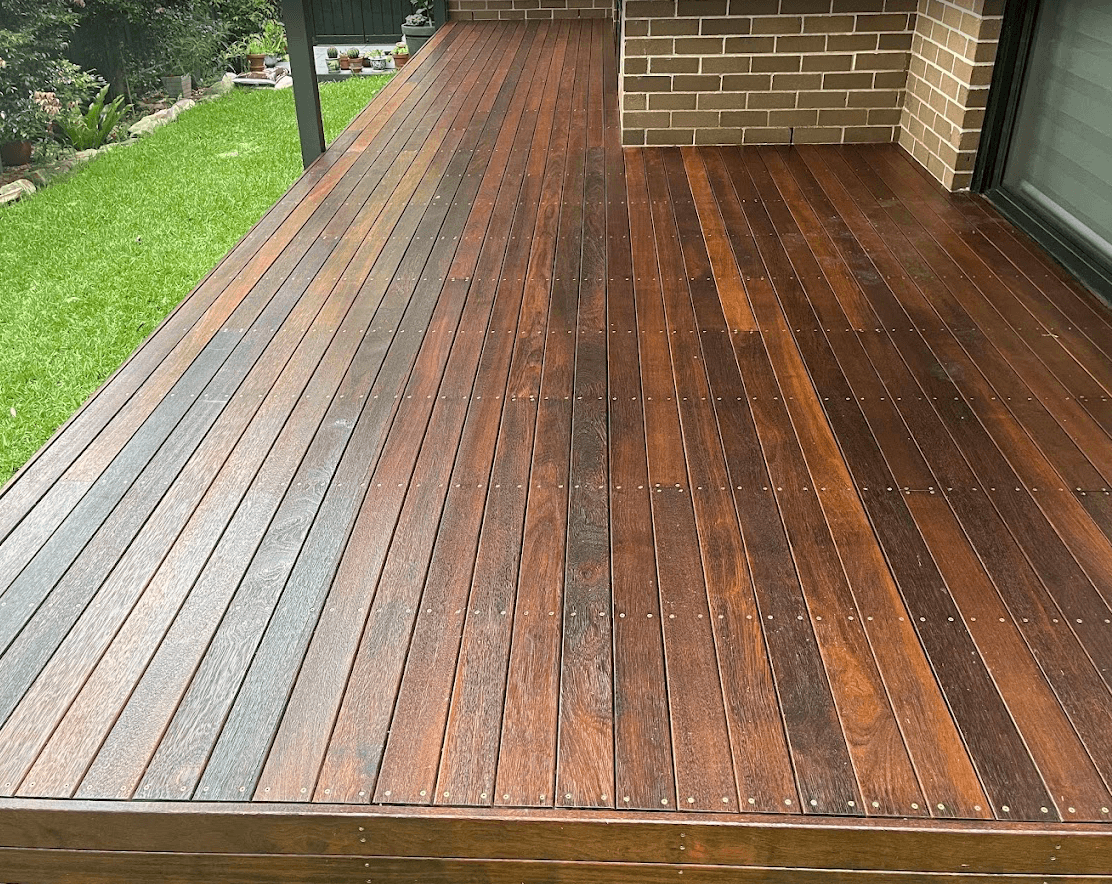
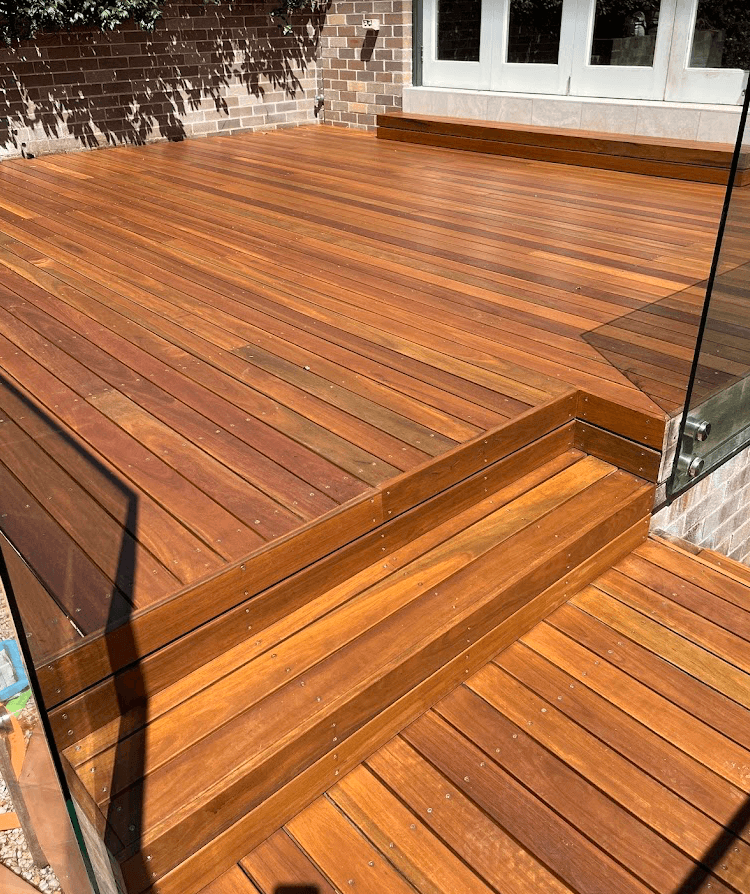
Recent deck work
Genuine deck projects completed by Northern Star Painting, labelled with their true locations.
Deck conditions around Berwick
Older decks at established suburban homes can carry multiple previous coating layers, greyed timber, worn traffic paths, older fasteners and repairs from previous years. Berwick Springs dates from the late 1990s, so some outdoor timber at established homes there has now had many years of exposure — though every deck’s age and history is different.
Toward Harkaway and Beaconsfield, larger properties can involve longer decks, stairs, pergola structures, bigger entertaining areas and more complex access. Across Melbourne generally, strong summer UV fades and dries timber, cool wet winters keep shaded sections damp for longer, and the path between the door and the steps wears faster than quiet corners — so parts of one deck can need different levels of preparation.
Decks around Berwick’s older & heritage properties
Some Berwick properties are affected by Heritage Overlay controls, and the requirements can vary between individual heritage places. External paint controls can apply to some properties, so owners should check the applicable planning controls with the City of Casey before changing externally visible colours or finishes.
Older painted timber should be treated cautiously because pre-1970s paint may contain lead. We do not recommend disturbing an old coating until its condition and appropriate handling requirements have been considered.
A coating is a finish, not a compliance check
Painting or coating a deck does not make the deck structure, balustrade or pool barrier compliant with building or safety requirements. Coating is a surface finish, not a structural certification or compliance assessment.
Deck painting — indicative pricing
These are indicative price ranges only. Every project is individually quoted after an on-site inspection — scope, condition and access change the number significantly.
| Project | Indicative range |
|---|---|
| Small deck — clean, sand and oil | $800 – $2,000+ |
| Standard deck — restoration and stain | $1,800 – $5,000+ |
| Large or multi-level deck | $4,000 – $9,000+ |
These ranges match our main Deck Painting page and are guidance only. Pricing depends on deck size, levels, stairs, rails, timber type, condition, previous coating, preparation, repairs, access and the selected coating system. Every project is individually quoted after inspection, with the agreed scope provided in writing.
Choosing a deck colour
Deck colour works best when it is considered alongside the house exterior, roof, fence, landscaping, paving, doors and windows, and any existing timber. There is no single best colour — charcoals, greys and neutral timber tones are popular examples, but the right choice depends on the home. Our colour consultation service can help you compare options before committing.
Tell us about your deck and we’ll get back to you within 120 minutes during business hours.
Why choose Northern Star Painting
Deck Painting Berwick FAQs
How much does deck painting cost in Berwick?
Our published indicative ranges are Small deck — clean, sand and oil: $800 – $2,000+; Standard deck — restoration and stain: $1,800 – $5,000+; Large or multi-level deck: $4,000 – $9,000+. These are guidance only. Actual pricing depends on deck size, levels, stairs, rails, timber type, condition, the previous coating, preparation, repairs, access and the selected coating system. Every project is individually quoted after inspection, with the agreed scope provided in writing.
Is painting better than oiling a timber deck?
Neither is universally better. Paint gives the strongest colour change and hides much of the grain; oil keeps the natural timber look and is easier to refresh but usually needs more frequent maintenance. The right choice depends on the appearance you want, the timber, its exposure and how much upkeep suits you.
Can you paint a Merbau deck?
Yes, Merbau can be coated, but its natural oils and tannins and the deck's existing condition need to be considered first. The preparation must suit the selected finish, whether that is an oil, a stain or a solid-colour deck paint.
Do you need to sand a deck before painting?
Usually some sanding is involved, but how much depends on the deck. Greyed, weathered timber and failing coatings generally need more sanding; a sound, recently coated deck may only need a light preparation. We decide after inspecting the surface.
Can you paint a composite deck?
It depends on the manufacturer and product. Some composite decking should not be coated at all, while others may permit specific coating systems. We check the product and manufacturer requirements before recommending any coating.
Can you paint an old weathered deck?
Weathered timber can often be prepared and recoated, but the condition of the boards has to be assessed first. Cleaning, sanding back greyed fibres and identifying damaged boards come before any coating is applied.
Is painted decking slippery?
Paint is not automatically slippery or automatically slip-resistant. Slip characteristics depend on the coating system, the surface and the conditions. Where appropriate, a slip-resistant additive or system can be discussed at the quote.
What time of year is best for deck painting in Melbourne?
It is less about the season and more about the conditions on the day. Suitable timing depends on the product, the moisture content of the timber, temperature, the rain forecast and drying conditions, so we schedule work around those requirements.
How long does a painted deck last?
There is no universal lifespan. Durability depends on the timber, sun and weather exposure, foot traffic, the preparation, the coating system and ongoing maintenance. We explain what to expect for the specific system recommended for your deck.
Can you repair damaged decking boards?
Loose, split or damaged boards and any structural concerns are identified and discussed with you before coating, so the agreed scope is clear before work begins.
Related services
Berwick and nearby areas
Ready to restore your Berwick deck?
Arrange an on-site inspection and we’ll recommend a suitable finish, with the agreed scope provided in a written quote.
Ready when you are
Let's paint something you'll be proud of.
Free on-site quotes across Melbourne. No pressure, no shortcuts, just an honest scope and a clean finish.
Request a quote