Exterior service
Concrete & Brick Render Painting Melbourne
Render and masonry painting for concrete, brick and rendered facades — including crack filling and appropriate breathable coating systems for Melbourne's climate.
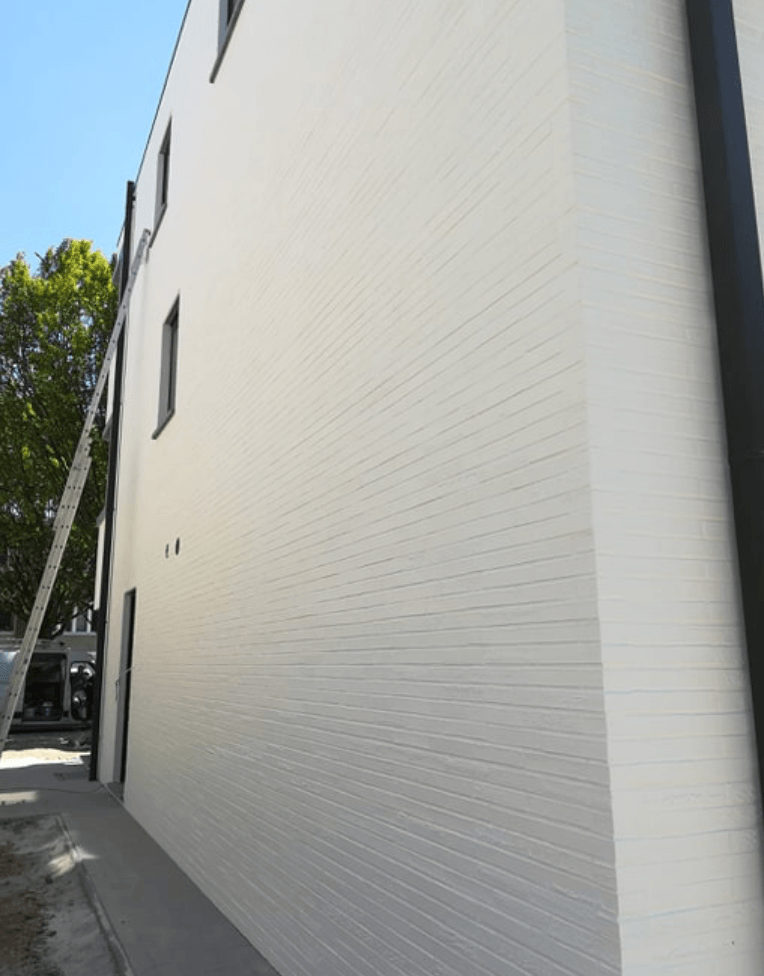
Masonry has to breathe
Brick, render and concrete hold and move moisture. Coat them with a sealed, impermeable film and that moisture has nowhere to go — it builds behind the coating and pushes it off in blisters and sheets, often taking a thin layer of render with it.
The right system for a Melbourne facade is a breathable, elastomeric-capable masonry coating that keeps liquid water out while letting vapour move through. That choice matters more on masonry than on any other exterior substrate, and it is the most common reason we get called to fix somebody else's work.
Surfaces we coat
- Acrylic and cement rendered facades
- Face brick and painted brickwork
- Besser block, concrete panel and tilt slab
- Rendered fences, retaining walls and letterboxes
- Concrete driveways, paths and garage floors in dedicated systems
- Bagged and textured masonry finishes
- Basement, garage and car park walls
Crack repair and preparation
Render cracks are graded before anything is coated. Fine hairline crazing is sealed and bridged with a high-build masonry coating. Structural or moving cracks are cut out, filled with a flexible masonry compound and reinforced where required — filling a moving crack with rigid product just relocates the crack a centimetre to one side.
Efflorescence, the white salt bloom that appears on brick and render, is brushed and treated rather than painted over, because it will keep pushing through the coating while it is active. New render is left to cure and its alkalinity checked before priming — coating green render is a guaranteed failure.
Coating systems and colour
We specify a masonry sealer or alkali-resistant primer followed by two coats of a premium exterior masonry membrane. On facades with hairline movement we use a high-build texture-tolerant coating that bridges fine cracking and holds up to Melbourne's temperature swings.
On colour, dark masonry facades absorb significant heat and expand more, which shortens coating life. We will tell you where a dark colour is likely to cost you longevity on a particular wall, and where a heat-reflective formulation solves it.
Our process, start to finish
- 01
On-site inspection
We walk the job with you, measure up, check surface condition and note anything that needs repair before a brush is lifted.
- 02
Written scope and quote
You receive an itemised quote listing surfaces, coats, products and inclusions — so you know exactly what you are paying for.
- 03
Protection and preparation
Floors, fixtures and landscaping are covered. Preparation is the stage that decides how long the finish lasts, so it is never rushed.
- 04
Application
Primers and topcoats applied to manufacturer specification, in the right conditions, with the correct number of coats.
- 05
Quality inspection
We inspect cut-ins, edges and coverage in natural light and correct anything that falls short before we call it finished.
- 06
Final walkthrough
We walk the completed job with you, hand over touch-up paint and colour records, and only invoice once you are happy.
Concrete & Render Painting — indicative pricing
These are indicative price ranges only. Every project is individually quoted after an on-site inspection — scope, condition and access change the number significantly.
| Project | Indicative range |
|---|---|
| Rendered fence or retaining wall | $700 – $2,500+ |
| Single storey rendered facade | $4,000 – $9,000+ |
| Double storey rendered facade | $7,000 – $16,000+ |
| Face brick facade, primed and coated | $5,000 – $12,000+ |
| Concrete floor or garage coating | $1,500 – $6,000+ |
Frequently asked questions
Can you paint face brick, and can it be undone later?
Yes, face brick can be primed and coated, and it transforms a dated facade. Be aware it is effectively permanent — removing paint from brick later is slow, expensive and rarely perfect — so it is worth being certain about the colour before starting.
Why is my rendered wall bubbling or flaking?
Almost always trapped moisture behind a non-breathable coating, or a coating applied over uncured render or active efflorescence. The fix is to remove the failed film, resolve the moisture source, treat the surface and re-coat in a breathable masonry system.
How long does new render need to cure before painting?
Typically 28 days for cement render, less for some acrylic renders. We check the surface alkalinity before priming, because coating render that is still curing leads to patchy adhesion and early failure regardless of how good the paint is.
Related services
Ready when you are
Let's paint something you'll be proud of.
Free on-site quotes across Melbourne. No pressure, no shortcuts, just an honest scope and a clean finish.
Request a quote