Preparation service
Plaster Repairs Melbourne
Cracks, holes, cornice damage, water stains and failed previous work — repaired properly before painting, so the finish sits on a sound surface rather than hiding a problem.
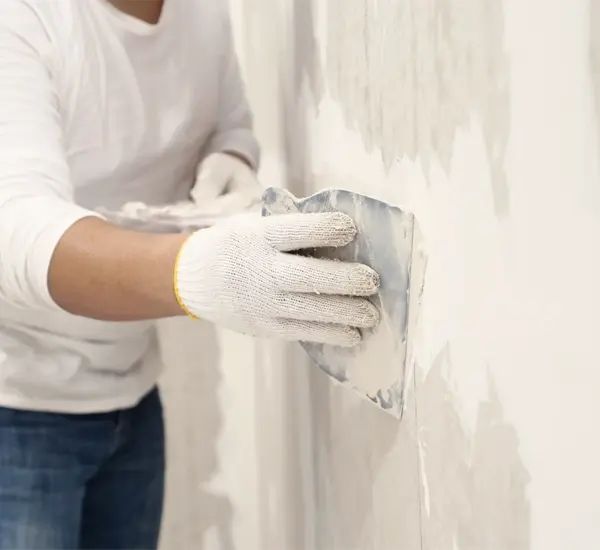
Paint does not hide anything
A fresh coat over an unrepaired surface makes the defect more visible, not less — flat colour draws the eye straight to every dent, ridge and hairline crack. The preparation stage is where a professional repaint separates itself from a cheap one, and it is invisible in the finished job, which is exactly why it gets cut.
We treat preparation as a priced, itemised part of the scope rather than something absorbed silently. You can see what repair work is included and make an informed decision about it.
Repair work we carry out
- Hairline and settlement crack repair, cut out and re-set with tape and compound
- Nail pops, screw pops and fastener re-fixing
- Holes, dents and impact damage patched and sanded flush
- Cornice repair, re-fixing and replacement of damaged sections
- Ceiling sheet repair and re-set joints
- Water damage assessment, stain sealing and replacement of degraded sheet
- Removal of failed or peeling previous coatings
- Wallpaper removal and wall make-good
- Skimming and re-setting walls that have taken too many patch repairs over the years
Diagnosing the cause, not just the symptom
Not every crack is cosmetic. Hairline cracks that follow sheet joints or radiate from door and window corners are usually normal seasonal movement and can be repaired and painted. Cracks that are wide, stepped, growing, or accompanied by doors that no longer close can indicate structural movement.
We will tell you the difference. Repairing and painting over active structural movement is money spent twice, and we would rather send you to a structural assessment than take the job and watch it crack again in six months.
Water stains are the same. A stain on a ceiling means water got there. Sealing the stain without finding the source means it comes back — often after the invoice is paid.
Sealing, priming and undercoating
Every repaired area is spot-primed before topcoating. Fresh compound is far more absorbent than the surrounding painted surface, and painting straight over it produces flashing — dull patches that show through the finished colour in raking light.
New plasterboard gets a dedicated sealer coat, not a watered-down topcoat. Stains from water, nicotine, smoke or permanent marker are sealed with a stain-blocking primer that stops them bleeding through. Glossy existing enamel is sanded and given an adhesion primer so the new coat has something to grip.
Cracked wall and ceiling plaster repair
Cracked walls and ceilings are the most common plaster call-out we take in Melbourne. Cracks along sheet joints, above doorways and around window reveals are cut out to a clean V, re-taped with paper or fibreglass tape, bedded, topped and sanded flush — not smeared with filler and painted over.
Ceiling cracks are treated the same way but with more attention to the cornice junction, where movement concentrates. Where a ceiling has multiple cracks radiating from one point, we check the sheet fixings and joists above before repairing, so the repair holds.
Plaster skim coating and wall smoothing
Walls that have taken years of patch repairs, old wallpaper, textured coatings or heavy sanding end up uneven no matter how well they are painted. A skim coat re-levels the entire wall in a thin plaster layer, giving you a flat, modern surface across the full face rather than a patchwork.
We skim coat single walls, full rooms and ceilings, sand to a level 5 finish where the light is unforgiving, then seal before painting. It is the difference between a wall that looks repaired and a wall that looks new.
What's included
Our process, start to finish
- 01
On-site inspection
We walk the job with you, measure up, check surface condition and note anything that needs repair before a brush is lifted.
- 02
Written scope and quote
You receive an itemised quote listing surfaces, coats, products and inclusions — so you know exactly what you are paying for.
- 03
Protection and preparation
Floors, fixtures and landscaping are covered. Preparation is the stage that decides how long the finish lasts, so it is never rushed.
- 04
Application
Primers and topcoats applied to manufacturer specification, in the right conditions, with the correct number of coats.
- 05
Quality inspection
We inspect cut-ins, edges and coverage in natural light and correct anything that falls short before we call it finished.
- 06
Final walkthrough
We walk the completed job with you, hand over touch-up paint and colour records, and only invoice once you are happy.
Plaster Repairs & Preparation — indicative pricing
These are indicative price ranges only. Every project is individually quoted after an on-site inspection — scope, condition and access change the number significantly.
| Project | Indicative range |
|---|---|
| Minor patching and crack repair | $300 – $900+ |
| Cornice repair or replacement | $400 – $2,000+ |
| Ceiling water damage repair | $600 – $3,000+ |
| Wallpaper removal and make-good | $500 – $3,500+ |
| Full room re-skim | $1,200 – $4,000+ |
Frequently asked questions
Can you repair plaster cracks before painting?
Yes — plaster repair is part of most of our interior projects. Cracks are cut out, taped and re-set rather than simply filled, so they do not reopen through the new paint.
Why do cracks keep coming back?
Usually because they were filled rather than cut out and re-set, or because the underlying movement is ongoing. We diagnose which it is before quoting the repair.
Do you remove wallpaper?
Yes. Wallpaper is stripped, adhesive residue washed off, and the wall repaired and sealed before painting. Old wallpaper on unsealed plaster sometimes takes the top paper layer with it, which is repaired as part of the make-good.
Will a water stain come back through the new paint?
Not if it is sealed with a stain-blocking primer and the source of the water has been fixed. We seal every stain and will flag anything that looks like an active leak.
Related services
Ready when you are
Let's paint something you'll be proud of.
Free on-site quotes across Melbourne. No pressure, no shortcuts, just an honest scope and a clean finish.
Request a quote